Sewer Line Repair in Glendale, Queens
HD camera diagnostics, targeted spot repairs, and sewer lateral replacements for residential properties.
RAW SEWAGE HAZARD WARNING
Raw wastewater contains dangerous biological pathogens and harmful gases. If sewage is backing up through basement floor drains, utility sinks, or lower-level plumbing fixtures, cease running water immediately. Avoid contact with standing blackwater, ventilate the area, and call (315) 202-8009 for urgent technical diagnosis.
A mainline sewer failure is one of the most stressful plumbing emergencies a homeowner can experience. Wastewater backups can flood basement mechanical rooms, contaminate flooring, and jeopardize heating equipment. For property owners facing recurring main drain blockages, professional sewer line repair Glendale Queens specialists utilize high-definition video inspection and precision excavation methods to restore proper drainage safely.
Causes of Sewer Lateral Failures in Glendale Properties
In historic Queens neighborhoods, residential sewer laterals—often constructed decades ago from extra-heavy cast iron or vitrified clay tile—face numerous underground hazards:
- Aggressive Tree Root Intrusion: Mature shade trees along residential streets send fine root tendrils into mortar joints and hairline pipe fissures. Inside the pipe, roots feed on moisture, forming dense woody obstructions that trap paper and solids.
- Cast-Iron Channel Rot: Over decades of wastewater flow, the bottom invert of cast-iron pipes erodes from acidic waste, eventually opening troughs into surrounding soil.
- Ground Shifting & Sags: Soil settlement and seasonal freeze-thaw cycles create pipe sags (bellies) where water pools, causing frequent blockages that necessitate emergency sewer backup repair Glendale Queens calls.
- Structural Cracks & Collapse: Heavy traffic loading or soil shifting can shear brittle clay tile, causing total flow blockage.
High-Definition Video Camera Diagnostics
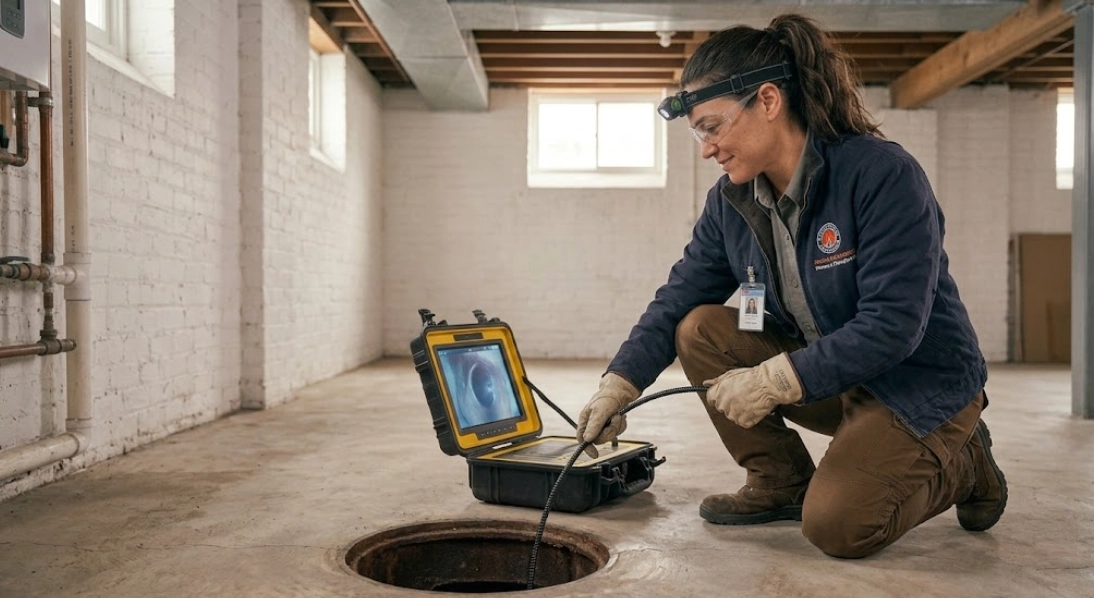
Modern utility repair eliminates exploratory excavation. A professional sewer camera inspection Glendale Queens technicians carry out involves feeding a high-resolution, self-leveling fiber-optic camera through the basement house trap cleanout. As the camera travels down the pipe, an integrated radio transmitter communicates with an above-ground locator, pinpointing the exact depth, distance, and location of fractures or root blockages.
Spot Repair vs. Complete Lateral Replacement
Camera findings determine the scope of repair. If the host pipe is predominantly sound and the defect is isolated to an accessible section under a lawn or driveway, a targeted spot repair is the most economical solution. If the lateral has deteriorated along its entire length or collapsed beneath the roadway, a complete replacement provides the only reliable permanent remedy.
Property Owner Responsibilities in New York City
Under NYC Department of Environmental Protection (DEP) regulations, property owners are legally responsible for maintaining the entire private sewer connection from the building exterior to the connection at the city sewer main—including piping situated beneath public sidewalks and streets. Street excavation requires NYC DOT permits, licensed master plumber authorization, and street restoration.
A failing sewer line can also flood your basement boiler room. Learn how to protect your heating equipment on our boiler repair homepage or review drain cleaning services and sump pump flood protection.
Frequently Asked Questions
Important answers regarding residential sewer lines in Glendale, Queens.
Under NYC Department of Environmental Protection (DEP) regulations, property owners are responsible for maintaining and repairing the entire private house sewer connection from the building foundation all the way to its connection with the public sewer main in the street.
A self-leveling fiber-optic HD camera with an integrated radio sonde transmitter is guided through the main sewer cleanout. It transmits real-time video revealing interior root intrusions, pipe cracks, joint offsets, and low belly sags, while locating the exact depth and spot from above ground.
Early warning signs include multiple plumbing fixtures draining slowly at once, gurgling sounds from lower-level toilets when showers drain, persistent sewer gas odors in the basement, or unexplained soggy depressions in yards or walkways.
Depending on the host pipe's condition, trenchless techniques such as cured-in-place pipe (CIPP) lining or spot sleeve installations can often restore damaged sections without full street excavation, provided the pipe has not suffered a complete structural collapse.