Boiler Replacement in Glendale, Queens
System sizing, fuel conversions, and code-compliant installations for residential and multi-family properties.
When a heating system reaches the end of its reliable operational life, planning a professional boiler replacement Glendale Queens homeowners and landlords can depend on provides lasting winter comfort and safety. Across Glendale, attached brick houses and detached homes often house legacy boilers that have been repaired repeatedly over several decades. When cast-iron sections crack or recurring breakdowns cause repeated loss of heat, upgrading to a modern, properly sized unit is the most practical long-term choice.
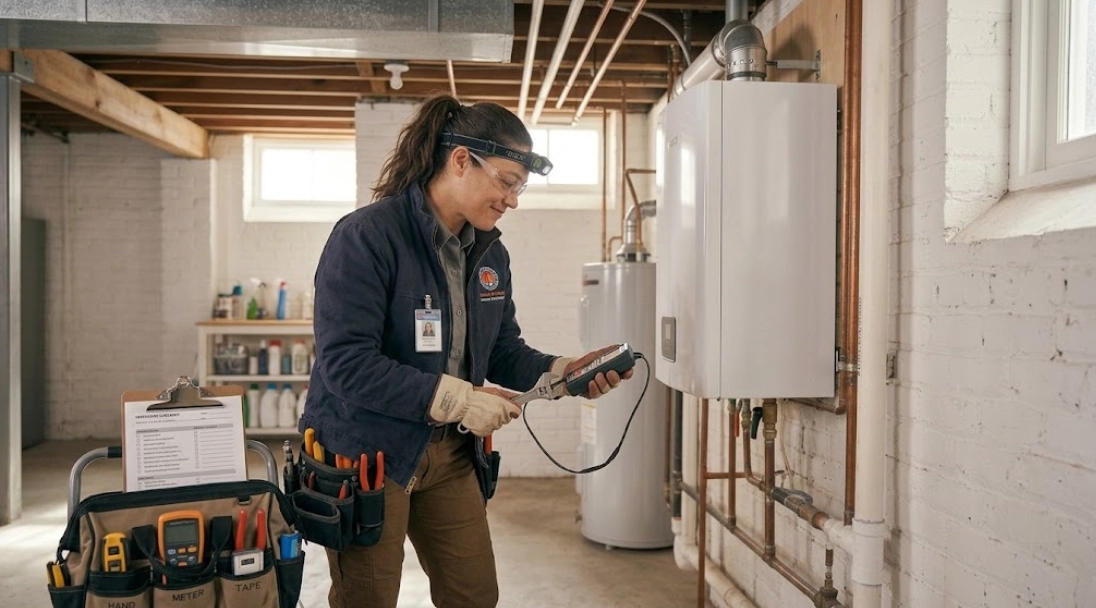
Signs Your Boiler Has Reached the End of Its Life
Determining when replacement makes more sense than continued repair involves evaluating equipment age, casting integrity, and escalating repair expenses:
- Cracked Cast-Iron Heat Exchanger: Water leaking directly from between cast-iron boiler sections cannot be welded or sealed under NYC safety codes.
- Chronic Repair Failures: When gas valves, low-water cutoffs, aquastats, and circulators fail repeatedly in the same heating season, cumulative repair costs rapidly eclipse the equipment's value.
- Heavy Internal Scaling: Decades of untreated hard water build up internal sediment layers, causing localized metal overheating and diminished heat transfer.
- Combustion Chamber Deterioration: Burnout of firepot refractories or warped burner trays creates dangerous flame rollout and carbon monoxide risks.
Accurate Sizing: Steam EDR vs. Hydronic Heat Loss
A successful new boiler installation Glendale Queens property owners invest in requires exact equipment sizing. In steam systems, an undersized boiler will struggle to produce enough steam volume to satisfy upper-floor radiators, while an oversized steam boiler builds pressure too rapidly, resulting in loud water hammer, short-cycling, and higher fuel bills.
Steam boilers must be sized strictly to the connected radiator load—measured in Equivalent Direct Radiation (EDR)—with an appropriate piping pick-up factor. For hydronic hot-water systems, equipment sizing is determined using Manual J heat-loss calculations based on building dimensions, wall insulation, and window exposures.
Boiler Conversion & NYC Regulatory Compliance
Many property owners in Glendale are interested in a boiler conversion Glendale Queens project to transition from heating oil to natural gas. An oil-to-gas conversion requires confirming that the local utility gas main has sufficient pressure and volume, evaluating existing chimney masonry, and installing a code-compliant stainless steel chimney liner to prevent acidic condensation from destroying mortar.
All replacement projects must adhere strictly to New York City Department of Buildings (DOB) regulations, including required permit filings, low-water cutoff safety testing, relief valve discharge piping safely routed to floor drains, and emergency burner switch installations.
Cost Factors Explained
The cost of a boiler replacement varies depending on site conditions. Key factors include whether the system is steam or hot water, required BTU firing rate, basement header repiping needs, old equipment removal and disposal, chimney lining requirements, and electrical controls upgrades. We conduct on-site evaluations so property owners understand the exact scope before work begins.
Frequently Asked Questions
Common questions regarding boiler replacement in Glendale, Queens.
For steam systems, the replacement boiler must be sized precisely to the connected radiator load—measured in Equivalent Direct Radiation (EDR)—rather than building square footage. For hydronic hot-water systems, an engineering heat-loss calculation determines the proper BTU capacity to prevent inefficient short-cycling.
Yes. In New York City, boiler replacements require DOB permits, chimney inspections, and final plumbing and gas inspections to confirm adherence to NYC Fuel Gas Code and Mechanical Code regulations.
An oil-to-gas conversion involves verifying adequate gas service capacity from National Grid, installing a dedicated gas supply line, evaluating chimney condition, installing a UL-listed stainless steel chimney liner, removing legacy oil storage tanks, and setting the new gas-fired boiler.
A standard residential boiler installation typically takes one to two days. This includes disconnecting and removing the existing cast-iron boiler, fabricating new supply and return headers, installing safety controls, and completing combustion testing.